
Nowruz: A 3,000-Year-Old Festival Celebrated by 300 Million People
- pupa writer

- Sep 7, 2025
- 3 min read
Updated: Sep 8, 2025
Which Countries Celebrate Nowruz?
When the first day of spring arrives, more than 300 million people worldwide gather to celebrate Nowruz. For many, it is known as the Persian New Year, but in reality, Nowruz is much more than a simple new year festival. It is an ancient celebration of renewal, nature, heritage, and unity, observed across a wide region stretching from the Middle East to Central Asia and beyond.
The origins of Nowruz go back more than 3,000 years to the traditions of the Persian Empire and Zoroastrianism. Over centuries, it became deeply rooted in the cultural fabric of many nations, turning into a shared festival that transcends borders and religions. Today, Nowruz is recognized by UNESCO as part of the Intangible Cultural Heritage of Humanity and celebrated in more than a dozen countries.

Countries that Celebrate Nowruz
Iran
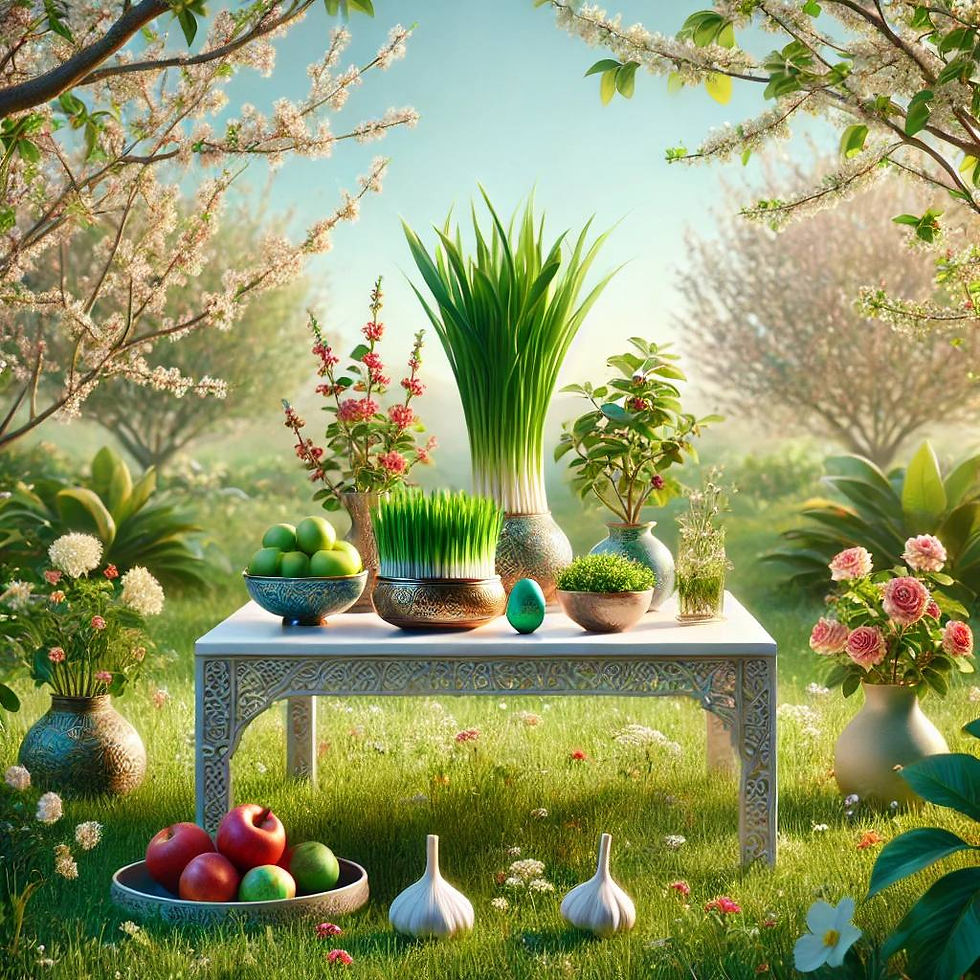
As the birthplace of Nowruz, Iran holds the most elaborate celebrations. Families prepare a Haft-Seen table, symbolizing prosperity, health, and renewal. Traditional dishes such as Sabzi Polo ba Mahi (herbed rice with fish) are served, and people visit relatives, exchange gifts, and wear new clothes. The celebrations last for thirteen days, ending with Sizdah Bedar, a picnic outdoors to mark the end of the holiday.
Afghanistan
In Afghanistan, Nowruz is marked by the famous Jahenda Bala ceremony in Mazar-i-Sharif. Thousands gather to watch the raising of a large religious banner that symbolizes renewal and unity. Families also celebrate with special dishes, cultural performances, and community gatherings.
Tajikistan
For the people of Tajikistan, Nowruz is a public holiday filled with folk music, dances, poetry readings, and traditional games. Special dishes like Sumalak (a sweet paste made from wheat) are cooked in large pots, often with neighbors and relatives helping together, reinforcing the spirit of community.
Uzbekistan and Turkmenistan
In Uzbekistan and Turkmenistan, Nowruz is marked by national festivals, often with large public performances, traditional sports like wrestling and horse games, and cultural shows. It is a holiday that emphasizes not only heritage but also the unity of the nation.
Azerbaijan
In Azerbaijan, Nowruz is an official holiday and one of the most important events of the year. Leading up to Nowruz, each of the four weeks before the New Year is dedicated to one of the elements — water, fire, earth, and wind — each celebrated with its own traditions. Families prepare sweets such as pakhlava and light bonfires to welcome spring.
Kurdish Regions (Iraq, Turkey, Syria)
For Kurdish people, Nowruz is not only a cultural but also a symbolic holiday. Celebrations often include bonfires, music, and traditional dancing. Lighting fire has a special meaning, symbolizing freedom, resistance, and renewal.
Kazakhstan and Kyrgyzstan
In Central Asia, Nowruz is a public holiday that symbolizes friendship, unity, and the renewal of nature. Communities organize large gatherings with traditional sports, horse games, music, and feasts. It is a celebration of both cultural identity and natural cycles.
The Persian Diaspora Worldwide
Nowruz has also traveled far beyond its original lands. Persian and Central Asian diaspora communities in Europe, North America, and other parts of the world keep the tradition alive. From Los Angeles to London, Toronto to Sydney, families set up Haft-Seen tables, cook traditional dishes, and invite friends from all cultures to share in the celebration.
Symbols of Nowruz
Nowruz is rich with symbolism. Some of its most iconic traditions include:
Haft-Seen Table – Seven items beginning with the Persian letter “S,” each representing an aspect of life: rebirth, health, love, wealth, patience, and more.
Chaharshanbe Suri (Fire Festival) – On the last Wednesday before Nowruz, people jump over bonfires to symbolically leave behind sickness and negativity while welcoming health and happiness.
Traditional Foods – Special dishes like Sabzi Polo ba Mahi, Kuku Sabzi (herb omelette), and sweets symbolize prosperity and joy.
Family and Community Gatherings – Visiting elders, exchanging gifts, and celebrating together emphasize the values of respect, love, and unity.

More Than a New Year
Nowruz is more than a New Year celebration. It is a bridge between cultures, past and future, tradition and modernity. Recognized by the United Nations as the “International Day of Nowruz,” it stands as a symbol of peace and solidarity among nations.
With its 3,000-year history, Nowruz reminds us of the deep connection between humanity and nature. It is a festival that unites over 300 million people across more than 10 countries, offering the message that renewal, hope, and light are universal values that transcend borders.
Conclusion
From Iran to Central Asia, from the Middle East to communities abroad, Nowruz has become a truly global festival. While traditions may vary from country to country, the core values remain the same: welcoming spring, honoring family and community, and celebrating life itself.
Nowruz is not just a Persian festival. It is a celebration of humanity, a cultural symphony, and a timeless reminder that renewal is part of our shared journey.

Comments